Vibe Coding: Efficiency Revolution or Collective Illusion?
“I just describe what I want, and let AI handle the rest.” This phrase is becoming the most popular mantra in the tech circle of 2026. But is it a truth that liberates productivity or a wishful illusion?
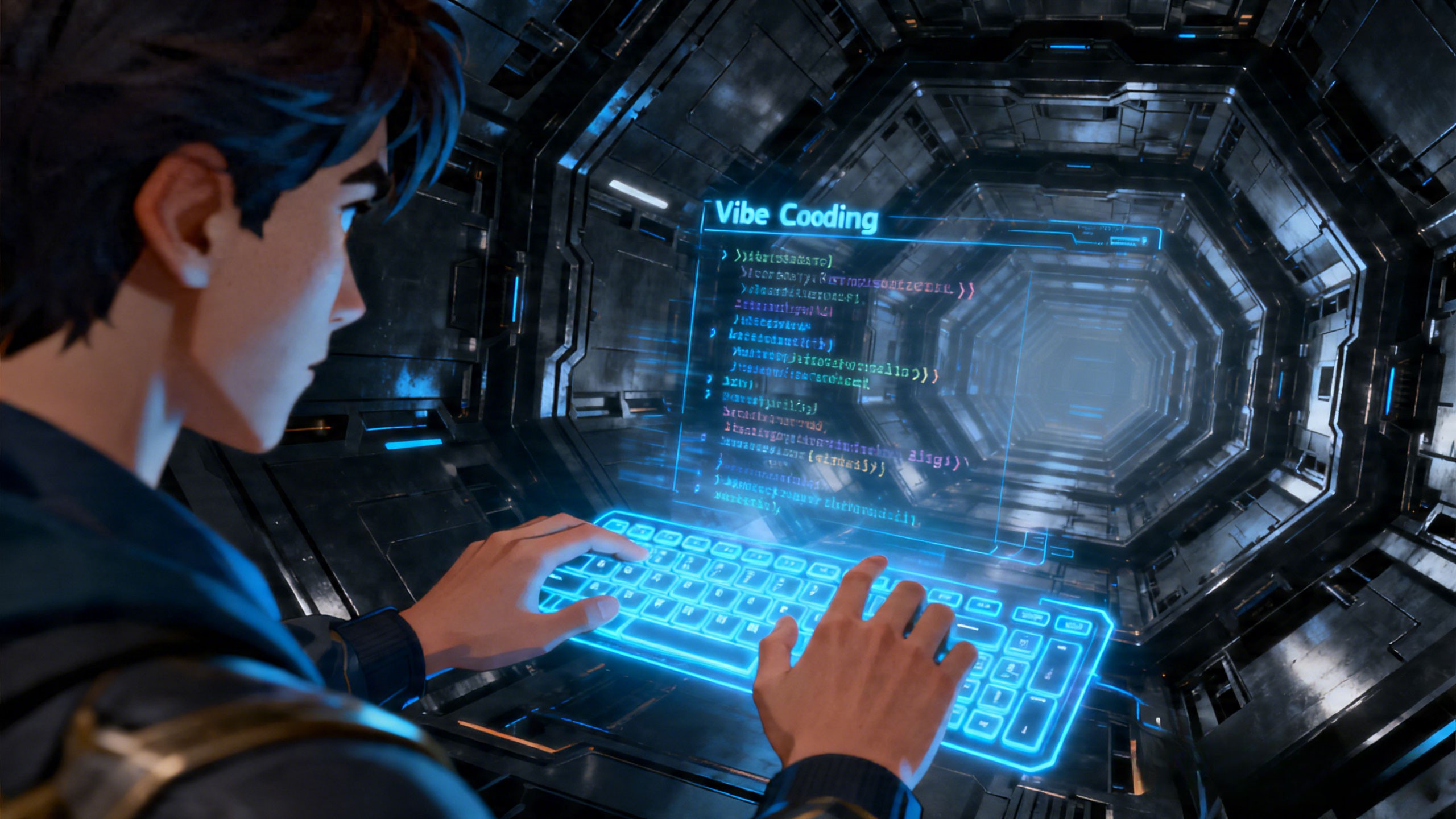
01 A PR that Sparked Industry Anxiety
In April 2026, Matteo Collina, a core contributor to Node.js, submitted a PR with 19,000 lines of code. The community erupted. How could one person write nearly twenty thousand lines of high-quality code in a week? Node.js is known for its rigorous code review process, relying on a precise trust chain among submitters, reviewers, and maintainers.
The answer soon emerged: almost all of this code was generated by AI.
This news ignited heated debates in the tech community. Supporters claimed, “Programmers will be unemployed,” while opponents retorted, “This isn’t programming; it’s just Ctrl+V.” Behind these opposing narratives lies a crucial question: Is Vibe Coding a true revolution or merely old wine in new bottles?
This question is significant not just for programmers but for all tech professionals’ fundamental attitudes towards AI. Product managers, designers, operators, and even management cannot remain unaffected.
If you are a product manager, this article concerns you too. The “Vibe Coding mindset” is not limited to programming; it is infiltrating the daily work of product managers. Have you reviewed the PRD written by AI? Have you validated the data sources for the competitive analysis done by AI? Do the user personas generated by AI have real user interviews to support them?
If the answer is ’no,’ then you are also a VibeCoder—only your Vibe is not code, but product decisions.
02 What Exactly is Vibe Coding?
The concept originated from Andrej Karpathy, former AI director at Tesla and co-founder of OpenAI. In early 2025, he described a programming state in a tweet:
“You are completely immersed in the vibe, forgetting the existence of code. You look at things, talk, run programs, copy and paste, and most of the time it just works.”
The Chinese translation is “vibe coding”, which sounds misleading—it suggests a low barrier to entry, as if anyone can do it.
However, Karpathy’s original intent was not so romantic.
He described a state of “weekend hacker aesthetics”: conversing with AI, accepting its outputs, and pasting error messages back to let AI fix them. No code comparison, no review of generated results, trusting AI to handle everything.
To be honest, the term “vibe” has harmed Vibe Coding. “Going by feel” makes it sound like anyone can do it, leading many non-technical people to view it as a panacea for avoiding learning programming. But what Karpathy described is actually a highly disciplined state: you can clearly articulate requirements, understand AI outputs, judge correctness, and fix bugs—only the code is written by AI, not by yourself.
This is not about “not needing to understand code”; it’s about “understanding in a different way.” The simplification and misunderstanding of the concept are the biggest tragedies in the spread of Vibe Coding.
03 The True Definition, Clarified by Simon Willison
Independent developer and well-known tech blogger Simon Willison provided a more precise definition shortly after the concept of Vibe Coding was introduced:
“Vibe Coding refers to using LLMs to build software without reviewing the code they generate.”
This is the core. If AI writes code, and you review it, thoroughly test it, and can explain how it works to others—that is not Vibe Coding; that is normal AI-assisted development.
The essential difference lies in compliance versus supervision.
Willison further stated: Labeling all AI-assisted programming as Vibe Coding is a way to whitewash irresponsible development behavior.
I believe Willison’s definition exposes an industry lie. Many companies publicly proclaim, “We fully embrace AI development,” but in reality, engineers are just “complying with AI” and passing the blame when issues arise. The term “Vibe Coding” provides a perfect excuse: “It’s not my code that’s problematic; it’s AI’s poor output.”
Responsible AI-assisted development and mindless dependency are separated not by technical gaps but by professional ethics. Any team that directly deploys AI outputs without review is essentially treating users as guinea pigs.
I even think that “Vibe Coding” should be a negative label, not a trendy development paradigm.
04 The Real Cost: Some Have Already “Lost the Ability to Code”
On April 14, 2026, an article on Toutiao went viral, titled “I Have Started Losing the Ability to Code: Developers Face the Real Cost of AI Programming.”
Pia Torain, a software engineer at Point Health AI, shared her experience:
For four consecutive months, she issued hundreds of prompts to AI daily.
After four months, she found herself unable to independently write a simple function. Loops and conditions that once came easily now left her staring blankly at a document for half a day.
Her exact words were: “If you don’t use it, you lose it.”
This phrase, I believe, is the most memorable in the tech circle of 2026.
But I want to add a more rational judgment: this issue is not new. After calculators became widespread, “mental arithmetic ability declined” for the same reason; after GPS navigation became common, “sense of direction” also diminished.
The key is—declining mental arithmetic is not crucial; what matters is whether you can still solve real problems with a calculator; losing your sense of direction is not critical; what matters is whether you can navigate a strange city without getting completely lost.
Vibe Coding is similar: The decline in the ability to write code is not frightening; what is frightening is if you can’t even articulate what the system is doing.
Pia Torain’s issue is not that she can’t write code anymore; it’s that she has lost the judgment over AI-generated code—that is the real danger.
05 Two Landmark Events Expose the Illusions of Vibe Coding
Merely discussing concepts and individual cases is not enough; in 2026, two industry events completely exposed the contradictions of Vibe Coding.
Event One: Apple Removed Replit and Vibecode Apps.
In early 2026, Apple removed the mobile apps of Replit and another app called Vibecode from the App Store. The stated reason was “violating developer agreements,” but the tech community widely believes that Apple is concerned about a flood of AI-generated, unreviewed applications entering the App Store, leading to safety risks and quality control issues.
Apple’s reasoning is quite clear: When “everyone can make apps” becomes a reality, who will uphold the quality baseline of the platform? This is not a technical issue; it is a governance issue—also a dimension that product managers should consider.
Event Two: Cursor Refused to Help Users Write Code.
An even more ironic moment occurred at Cursor—a code editor focused on AI assistance. A user requested Cursor’s AI to help generate complete commercial project code, but the AI refused, stating that “this exceeds reasonable use.”
This incident sparked significant discussion in the tech community: an AI programming tool actually refused to assist users in coding?
However, in my view, Cursor’s decision highlights a critical point—even AI tools recognize that “mindless output” has its limits.
These two events reveal a neglected truth: the “efficiency myth” of Vibe Coding is being undermined by the platform and tool providers themselves.
Apple’s removal indicates that “AI generation ≠ ready for deployment,” while Cursor’s refusal signifies that “AI assistance ≠ AI taking over.” The real limitation of Vibe Coding is not a technical bottleneck but a trust boundary.
When you use AI to write code for personal use, no one cares; but when you want to deliver AI-written code to users, the trust chain breaks—how can you assure users that this code is safe, stable, and free of backdoors? Relying on AI’s confidence? On Karpathy’s tweet?
06 The Core of the Controversy: Two Camps Debate Different Issues
The tech community has split into two distinct camps:
Supporters:
- “The barrier has lowered; non-technical backgrounds can now make apps.”
- “Prototype validation speed has increased tenfold, drastically reducing startup costs.”
- “AI code quality is already high; review costs are much lower than writing from scratch.”
Opponents:
- “What is generated is Shit Mountain (bad code); technical debt will eventually need to be repaid.”
- “Not understanding code means you can’t judge correctness, leading to major pitfalls.”
- “Developers are losing their independence, handing their jobs over to a black box.”
To be honest, these two voices are not debating the same issue.
Supporters discuss “can we do it?” while opponents argue “should we do it?"—these are two entirely different questions. Technical feasibility does not equate to long-term rationality.
I believe the correct question should be: In what scenarios does the benefit of Vibe Coding outweigh the cost? During the prototype validation phase? Internal tools? Personal projects? The answer might be “yes.” But what about commercial products aimed at users? The answer is likely “no.”
Discussing the merits of tools without considering scenarios is a common cognitive bias among product managers—we often criticize technical personnel for focusing solely on technology without considering business, yet we evaluate a development paradigm in the same way.
07 Industry Data: Efficiency Gains and Hidden Costs
Relying solely on opinions is not persuasive enough; let’s look at what the data says.
CITIC Securities pointed out in a quantitative research report:
“The cost of Vibe Coding is the potential accumulation of technical debt and architectural drift—AI-generated code often acts like a ‘black box,’ trading short-term efficiency for long-term maintainability risks.”
GitHub’s data is also noteworthy: Copilot users reported that, on average, 46% of the code was suggested by AI. However, the same report noted that about 40% of AI suggestions were ’not adopted’—meaning nearly half of the AI-generated content was rejected by engineers.
This data is revealing: AI is not omnipotent; it is more like an experienced intern—capable but requiring supervision.
Another significant data point comes from frontline developers’ self-reports: in a community survey on Stack Overflow in early 2026, about 68% of respondents indicated they were using AI-assisted programming tools, but only 23% stated they would conduct a thorough review of AI-generated code.
This means: Nearly three-quarters of AI-assisted developers are “complying” rather than “supervising.”
This data is more compelling than any opinion: the vast majority are “using AI,” but few are “reviewing.”
This is the truly frightening aspect of Vibe Coding—not that the technology itself is problematic, but that the users’ attitudes are. To use an inappropriate analogy: if the safety standard for autonomous driving is “accident rates lower than human driving,” then the safety standard for Vibe Coding should be “review coverage exceeds a certain threshold.” But in reality, not even this threshold has been defined, let alone enforced.
The entire industry is treating AI programming with a “let’s get it running first” mentality, reminiscent of the early internet approach of “launch first, iterate later”—the difference being that the cost of iteration back then was a decline in user experience, while now it could be systemic safety hazards.
08 Product Manager Perspective: What Does Vibe Coding Mean for Us?
Finally, we arrive at what I really want to discuss.
As an AI product manager, I use AI tools daily to assist my work—writing PRDs, conducting competitive analysis, and sketching prototypes. I am not a programmer, but the impact of Vibe Coding on me may be greater than on most programmers.
Because it is redefining the threshold for “understanding technology”—which is one of the foundational supports for a product manager’s core competitiveness.
Vibe Coding Will Not Replace Programmers
Many people see “natural language programming” and immediately think: “Then what do we need programmers for? Can’t product managers just handle it themselves?”
My judgment is: In the short term, no. Even in the long term, it’s unlikely.
The core value of programmers is not just writing code but understanding systems, assessing risks, designing architectures, and debugging—these skills are not eliminated in the AI era; they are amplified.
You let a product manager who knows nothing about system architecture use Vibe Coding to create a complex system; they might produce a demo at most. But when issues like concurrency problems, security vulnerabilities, and data consistency bugs arise after launch, they will likely be at a loss.
AI can write code, but it cannot understand where the business boundaries lie. The one who defines the boundaries will always be human judgment.
Product Managers Must Learn to Work with AI
While product managers will not lose their jobs due to Vibe Coding, their working methods are indeed changing.
For example, when I used to write an internal tool prototype, I needed to find the front-end and back-end teams, schedule, and wait—taking anywhere from three days to a week. Now, I use Cursor or Trae, describe my requirements, and have a runnable prototype in two hours.
This change significantly enhances the “validation speed” for product managers. You can quickly validate whether an idea is worth engineering resources—this is a huge competitive advantage. But the premise is that you are willing to step out of your comfort zone to understand what the AI-generated content is doing. Otherwise, your “rapid validation” is merely replacing one black box with another.
This is precisely the dilemma for product managers: your core competencies are judgment and system thinking, but when AI starts providing “seemingly correct” answers, do you still have the motivation to think deeply?
Many people do not realize: The threat of Vibe Coding to product managers is greater than to programmers.
Programmers at least have years of technical accumulation to “fall back on”; if product managers already lack system thinking, being packaged by AI means they may not even recognize their shortcomings. You might think AI is helping you write documents, sketch prototypes, and conduct analyses, but in reality, you are relying on the illusion of AI to mask your capability deficiencies.
The more powerful the tools, the more critical the foundational skills become—this is not just a correct platitude; it is a sentiment I have repeatedly validated in my actual work.
A product manager who cannot code produces runnable code with AI, akin to a person who cannot cook using pre-made dishes to set a banquet—on the surface, it seems impressive, but have you truly “mastered” it?
09 Three Principles: How Product Managers Can Coexist with Vibe Coding
Principle One: Use AI as a Lever, Not a Crutch
AI is a lever that amplifies your abilities, allowing you to move faster. But if you cannot walk, the lever will only magnify your falls.
Being able to review is more important than being able to generate.
Principle Two: Embrace Speed in Prototyping, Return to Discipline in Production
Many product managers confuse “prototypes” with “products,” which is the biggest cognitive trap of Vibe Coding.
The demo you quickly produced with AI only proves that “this direction is worth exploring”; it does not prove that “this system can be launched.” Vibe Coding excels at lowering trial-and-error costs, but it never reduces the difficulty of system engineering.
I have seen too many product managers present AI-generated prototypes to their bosses, claiming, “This feature is finalized,” only for the engineering team to spend three months reworking it. This fundamentally revolves around the power struggle of “who bears the technical debt”—product managers must be clear that efficiency in the prototyping phase does not equal efficiency in the product phase. The time saved with AI will eventually need to be repaid in the form of technical debt.
Principle Three: Establish a “Critical Trust” in AI
Not trusting AI is stagnation. Unconditional trust in AI is self-destruction.
The correct attitude is “critical trust”: believe that AI can enhance efficiency but always retain your judgment. Specifically—
- Read through AI-generated content and ask, “Are there any issues here?”
- Think through AI’s suggestions and ask, “Does this align with business logic?”
- Verify AI’s claimed conclusions and ask, “Is there data to support this?”
10 In Conclusion
Returning to the initial question: Is Vibe Coding an efficiency revolution or a collective illusion?
Neither. It is a mirror reflecting the users’ own abilities and attitudes.
For those with solid technical foundations and clear business judgment, Vibe Coding is a true efficiency lever—quick validation, reduced trial-and-error costs, and a focus on higher-value work.
For those treating AI as a lifeline and unwilling to build their judgment, Vibe Coding is a beautiful illusion—short-term outputs may look good, but long-term capabilities are quietly degrading.
But I want to say much more than that.
The entire discussion around Vibe Coding exposes a deeper issue in the tech circle—we are thinking about AI in binary oppositions. “AI can do vs cannot do,” “replace vs not replace,” “good vs bad”… This way of thinking itself is what needs to be questioned.
AI is not here to take your job, nor to save you. It is a new factor of production, like electricity, the internet, or smartphones. How to use it, within what boundaries, and who is responsible for the consequences of its use—the answers to these questions will always depend on people, not on AI.
Karpathy himself used a self-deprecating tone when introducing this concept. However, many followers have taken it as a given programming philosophy.
This is something Karpathy did not anticipate and is also the most concerning aspect for every product manager.
Comments
Discussion is powered by Giscus (GitHub Discussions). Add
repo,repoID,category, andcategoryIDunder[params.comments.giscus]inhugo.tomlusing the values from the Giscus setup tool.